

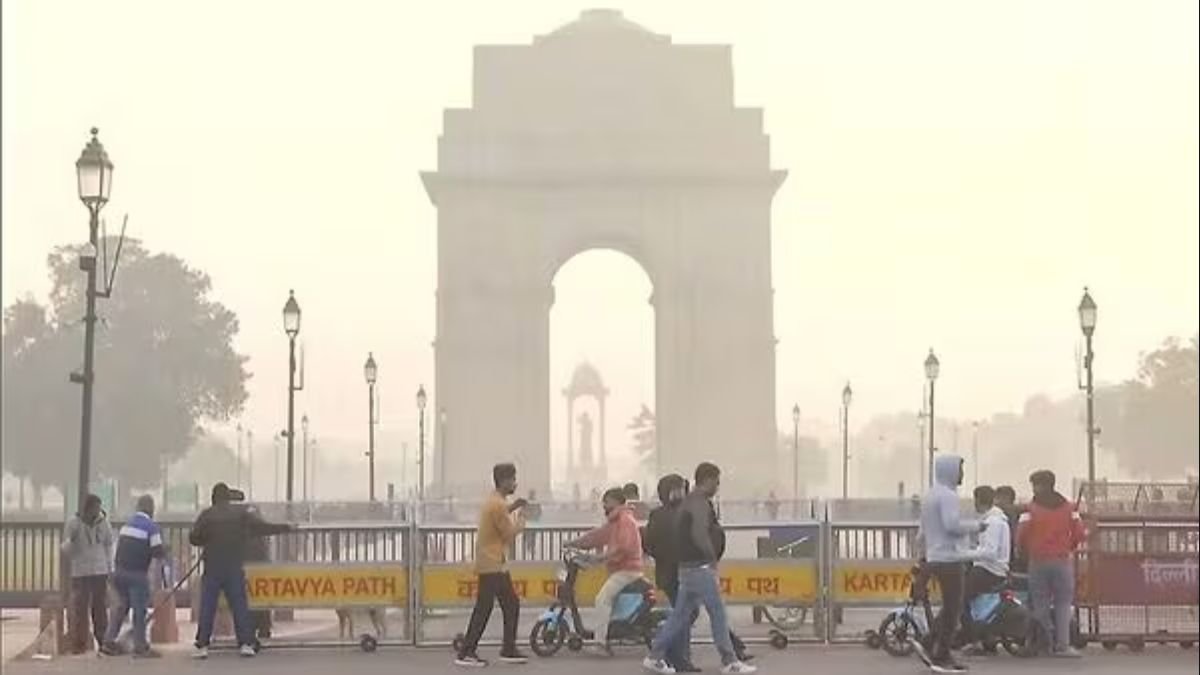
For the first time in more than three weeks, Delhi woke up to marginally clearer skies as the city’s Air Quality Index (AQI) shifted from the very poor and severe zones into the poor category. While “poor” is still far from healthy, for residents who have endured almost a month of unrelenting smog, this small improvement offered a momentary sense of relief. Environmental experts, however, caution that the city is not out of danger and that this slight dip in pollution levels should not be mistaken for a long-term recovery.
Delhi’s pollution levels have long been the subject of national and international scrutiny. During winter, temperature inversion, reduced wind speed, and increased emissions converge to create a toxic atmosphere. In the last 24 days, the city’s AQI frequently crossed 400, occasionally nearing 500 in several hotspots like Anand Vihar, Rohini, and Mundka. Such levels fall under the “severe” category, posing significant health risks even to otherwise healthy individuals. Hospitals across the capital saw a troubling rise in cases of asthma attacks, bronchitis, eye irritation, and cardiovascular stress.
The recent shift to the “poor” category was attributed to a combination of meteorological changes and policy interventions. An overnight increase in wind speed helped disperse particulate matter, while slightly warmer daytime temperatures improved vertical air mixing. Additionally, measures under the Graded Response Action Plan (GRAP) Phase III—such as restrictions on construction, intensified street-cleaning, and curbs on polluting vehicles—played a partial role in reducing emissions.
Officials from the Delhi Pollution Control Committee (DPCC) noted that this is a “temporary improvement,” citing that emissions from vehicles and industries remain high. Stubble burning in neighboring Punjab and Haryana, a major seasonal contributor to Delhi’s pollution crisis, showed a slight reduction in recent days but is expected to fluctuate depending on agricultural activity and weather.
For residents, however, even a minor improvement felt meaningful. Morning joggers returned cautiously to parks, some removing their masks for brief intervals. Schoolchildren, who had spent days indoors due to air quality advisories, were seen outdoors during recess after schools received updated guidelines. Yet, many parents remain wary; pediatricians warn that children are still highly vulnerable to pollution even in the “poor” AQI category.
Despite the temporary relief, the larger challenge persists: Delhi is consistently one of the world’s most polluted cities. Experts argue that sustainable solutions require long-term planning, not emergency measures. They recommend expanding public transportation, enforcing stricter industrial emissions standards, creating green buffers, and incentivizing cleaner energy adoption. Urban planners also emphasize the need for redesigning road networks, promoting cycling infrastructure, and developing low-emission zones.
The pollution crisis also reflects deeper socio-economic issues. Seasonal stubble burning, for instance, is rooted in agricultural practices, economic constraints, and lack of adequate crop-management alternatives. While governments have introduced machinery subsidies and crop diversification programs, adoption remains uneven. Farmers argue that alternatives like Happy Seeders and Super-SMS machines are expensive, inefficient for large fields, or require more labor. Long-term solutions will require ongoing dialogue between policymakers and farmers, backed by technology, financial incentives, and educational outreach.
Meanwhile, Delhi’s residents continue adapting to a new normal. Sales of air purifiers, N95 masks, and indoor plants surge every winter. Some families install multiple purifiers per household. Schools shift to hybrid modes when AQI worsens. Fitness trainers modify workout plans to include more indoor sessions. Among the elderly, respiratory illnesses peak, straining both private and public healthcare systems.
As the AQI dipped to “poor” today, social media filled with cautious optimism. But many users also criticized the tendency to celebrate what is still unhealthy air, arguing that it reflects the growing acceptance of pollution as unavoidable. Environmental activists urged citizens to maintain pressure on authorities for sustainable interventions, reminding them that temporary improvements often vanish when weather conditions shift again.
Meteorologists warn that the coming week may bring fluctuations depending on wind direction and crop-residue burning patterns. If winds slow or reverse, pollutants could accumulate again, pushing AQI back into hazardous zones. Authorities remain on alert, prepared to reintroduce or intensify GRAP restrictions if required.
For now, Delhi breathes slightly easier—but the road to clean, healthy air remains long and uncertain. The day’s improvement is a reminder of what is possible, yet also of how fragile and fleeting such progress can be.

Leave a Reply