

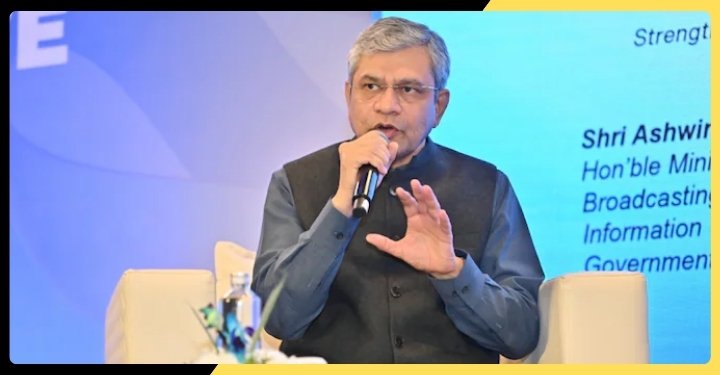
In a strong endorsement of the rights of journalists and media houses, Ashwini Vaishnaw has asserted that news creators deserve fair remuneration for the content they produce, especially as digital platforms increasingly rely on their work to drive traffic and advertising revenue. Speaking at a recent media and technology forum, the minister emphasized that the sustainability of credible journalism depends on equitable revenue-sharing mechanisms in the digital ecosystem.
Vaishnaw underlined that the transformation of the news industry over the past decade has been dramatic. While digital platforms and social media networks have expanded access to information, they have also disrupted traditional business models that once sustained print and broadcast journalism. Advertising revenues, which were historically the backbone of news organizations, have shifted significantly toward large technology platforms that aggregate and distribute content.
According to the minister, this structural imbalance poses a serious challenge to independent journalism. “Content creation involves time, effort, and resources. Journalists work tirelessly to verify facts, conduct investigations, and deliver credible information. If creators are not compensated fairly, the entire ecosystem of trustworthy news is at risk,” he said.
Vaishnaw noted that under the leadership of the Government of India, policy discussions are underway to ensure that digital intermediaries operate in a manner that respects both innovation and fairness. He highlighted that news content is not merely another form of data, but a public good that plays a vital role in strengthening democracy.
Industry stakeholders have long argued that while technology platforms benefit from news content through increased user engagement and advertising income, publishers often struggle to monetize their work adequately. Many smaller and regional media houses are particularly vulnerable, lacking the bargaining power to negotiate favorable terms with global tech giants.
The minister suggested that regulatory frameworks may need to evolve to address these concerns. Drawing parallels with global developments, he pointed out that several countries have introduced or are considering legislation to ensure that digital platforms compensate news publishers when their content is used or shared. India, he indicated, is closely studying such models to determine what approach would best suit its unique media landscape.
Vaishnaw stressed that any regulatory measures would aim to strike a balance. “We are not against technology companies. They have played a transformative role in democratizing access to information. However, innovation must go hand in hand with responsibility,” he said. The goal, he explained, is to create a digital ecosystem where creators, platforms, and consumers all benefit equitably.
The minister also highlighted the importance of transparency in algorithms and content distribution practices. He observed that opaque algorithms can significantly influence which news stories gain visibility, thereby affecting publishers’ revenues and public discourse. Greater transparency, he argued, would help ensure a level playing field and foster trust among stakeholders.
Representatives from media organizations welcomed the minister’s remarks, describing them as a positive step toward addressing long-standing grievances. Many publishers have called for structured negotiations with digital platforms, possibly facilitated by a regulatory authority, to establish fair compensation frameworks.
At the same time, digital platform representatives have cautioned against overregulation. They argue that their services drive substantial traffic to news websites, generating indirect revenue through subscriptions and advertisements. Some have emphasized the need for collaborative solutions rather than adversarial regulation.
Vaishnaw acknowledged these perspectives but maintained that voluntary arrangements alone may not suffice. He reiterated that public policy must safeguard the interests of content creators, particularly as misinformation and declining newsroom resources pose growing challenges.
The minister also linked fair remuneration to the broader issue of combating fake news. “When credible journalism is financially strained, it creates space for misinformation to thrive. Supporting legitimate news creators is essential to maintaining the integrity of our information ecosystem,” he said.
As India continues to expand its digital infrastructure and internet user base, the question of how to fairly distribute value within the online ecosystem is becoming increasingly urgent. With millions relying on digital platforms for daily news, the stakes are high—not just for publishers, but for democracy itself.
Vaishnaw concluded by affirming the government’s commitment to consultations with all stakeholders. “We believe in dialogue. Our objective is to ensure that technology empowers society without undermining those who produce credible and valuable content,” he said.
The coming months are likely to see intensified discussions between policymakers, media houses, and technology firms. Whether through legislative reform, negotiated settlements, or industry-led initiatives, the push for fair remuneration for news creators appears set to remain a key priority in India’s evolving digital policy framework.

Leave a Reply