

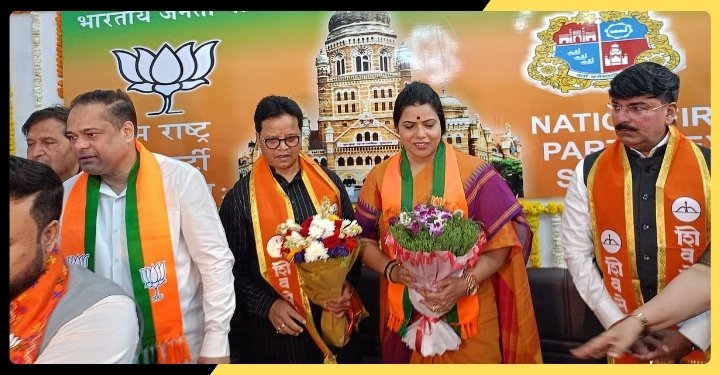
In a momentous political development in Maharashtra’s capital city, the Bharatiya Janata Party (BJP) has wrested the prestigious post of Mayor of Mumbai from the Shiv Sena after a 25-year continuous run, with Ritu Tawde emerging as the new mayoral pick in Asia’s richest municipal corporation, the Brihanmumbai Municipal Corporation (BMC).
This transition represents not just a change in leadership but a symbolic end to a quarter-century of Shiv Sena dominance in the city’s civic governance. The decision comes on the back of the BJP’s strong showing in the recently concluded BMC elections, where the party emerged as the single largest political force in the 227-member house.
Election Results and Political Dynamics
The outcome of the BMC polls was decisive. The BJP secured 89 seats, making it the biggest individual party within the municipal corporation. While Shiv Sena — particularly the faction led by Eknath Shinde — managed 29 seats, these numbers, when combined with BJP’s tally and other allies in the Mahayuti alliance, provided comfortable control of the civic body.
The Shiv Sena (UBT) faction — the traditional Shiv Sena under Uddhav Thackeray — won 65 seats but was unable to counterbalance the combined strength of the BJP and allied parties. Other parties, including the Congress, AIMIM, NCP (Ajit Pawar faction), and the Samajwadi Party, also won seats, but none could significantly shift the balance of power in the corporation.
Because the BMC has been under state government-appointed administration for nearly four years — since March 2022 — owing to the expiry of the previous council’s term, this election holds particular significance. It reinstates elected leadership at the helm of civic administration in Mumbai.
Who Is Ritu Tawde?
Ritu Tawde is a seasoned civic leader and three-term corporator from Ghatkopar, known for her administrative experience and extensive grassroots work. She was nominated by the BJP and officially declared as the Mahayuti alliance’s mayoral candidate at an official meeting of party corporators.
A long-time figure in Mumbai’s municipal politics, Tawde has previously served in significant roles such as Chairperson of the Education Committee of the BMC. Her career spans multiple electoral cycles, and she is often credited with a deep knowledge of civic governance, urban infrastructure challenges, and citizen service delivery mechanisms.
Her nomination also fulfilled the reservation requirement for the mayor’s post, which in this election cycle was designated for a woman from the general category — a stipulation that shaped the BJP’s candidate selection strategy.
Deputy Mayor Alongside Ahead
In a complementary political arrangement, the Shiv Sena (Shinde faction) has nominated corporator Sanjay Shankar Ghadi for the position of Deputy Mayor. Ghadi, a corporator from Ward No. 5, will serve in this role under a term-splitting arrangement — set for 15 months with opportunities for other party corporators as part of the alliance agreement.
This kind of power-sharing demonstrates the internal negotiations and compromises within the Mahayuti alliance, where the BJP and Shiv Sena have jointly staked claims to different high offices in Mumbai’s civic governance structure while preserving their partnership.
End of an Era: Shiv Sena’s Long Reign
Since 1997, the Shiv Sena had a near-unbroken hold on the position of mayor in Mumbai, thanks to its political influence and strong base within the BMC. Over the years, the party became synonymous with city administration, championing causes related to Marathi identity, local development, and civic infrastructure.
The BJP’s rise to the mayor’s post therefore marks a significant shift in the political landscape of the city. Though the BJP had been a major player in the corporation for years — often in coalition with Shiv Sena — this is the first time in 25 years that its nominee will occupy the mayoral seat, reflecting a broader realignment of political power in Mumbai.
As political analysts have pointed out, the shift also reflects changes in voter preferences and local political strategies, with the BJP consolidating support across various demographic groups, including segments that were traditionally not its core base.
Key Challenges Ahead for the New Leadership
As Mumbai’s mayor, Tawde steps into a role with significant administrative responsibilities. The BMC, known as Asia’s richest municipal corporation, manages an annual budget running into tens of thousands of crores, dwarfing the fiscal size of many states in India.
Her tenure will require navigating major urban challenges such as:
- Infrastructure development to keep pace with rapid urban growth.
- Affordable housing and slum redevelopment.
- Public transportation and traffic management.
- Sanitation, water supply, and environmental sustainability.
- Disaster preparedness and climate resilience.
The mayor’s role in the BMC is influential but also closely tied to the corporation’s administrative machinery, which includes the Municipal Commissioner and various departmental heads. Tawde’s success will depend on close coordination with these officials, as well as with state and national government agencies.
Political Implications and Future Outlook
The BJP’s victory and Tawde’s elevation to mayor reinforce the party’s expanding footprint in urban local bodies beyond state and national politics. It could signal the beginning of a new phase in Maharashtra’s civic governance, with shifting alliances and competitive political strategies in future elections.
For the Shiv Sena, the loss of the mayor’s post after a quarter-century calls for introspection and strategic recalibration, especially as it navigates internal factionalism and broader political partnerships.
The coming months in Mumbai’s civic politics will be closely watched — both for the performance of the newly elected mayor and for how political parties align themselves ahead of future municipal and state elections.

Leave a Reply