

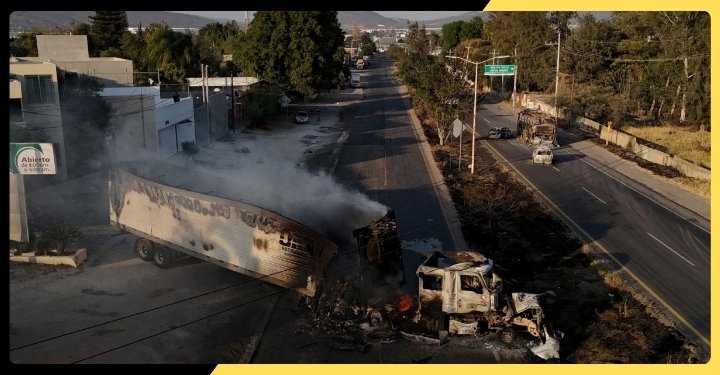
A sweeping security response unfolded nationwide after the death of a prominent cartel kingpin triggered fears of widespread violence. Schools were canceled in multiple municipalities, and officials urged residents to remain indoors as a precaution against potential reprisals.
The cartel leader was killed during a coordinated raid involving federal security forces. According to preliminary reports, the operation followed months of surveillance and intelligence gathering. Officials stated that the objective was to apprehend the suspect, but the situation escalated into a deadly confrontation.
Almost immediately, authorities began implementing contingency plans. Educational institutions suspended classes, citing concerns for student safety. Public events were postponed, and law enforcement agencies deployed additional personnel to safeguard critical infrastructure, including transportation hubs and government facilities.
The heightened alert reflects longstanding patterns associated with cartel leadership disruptions. Experts explain that such moments can be unpredictable, as criminal networks react to preserve authority and deter perceived threats. Demonstrations of force—such as road blockades or attacks on public assets—have historically been used to send messages to rivals and the state.
Government officials addressed the nation, emphasizing that security forces remain in control. “We are prepared for any attempt to destabilize our communities,” a senior official said. “Our objective is to protect citizens and maintain order.”
Despite official reassurances, anxiety has spread quickly. Social media platforms were flooded with reports of suspicious activity, though many remained unverified. Authorities urged the public to rely solely on official channels for updates and warned that spreading rumors could cause unnecessary panic.
In several urban areas, patrol vehicles were stationed at key intersections, and officers conducted random inspections. Helicopters monitored traffic flows from above, while specialized units remained on standby. The visible show of force was intended both to deter criminal actions and to reassure residents.
Parents faced the sudden challenge of arranging childcare as schools closed with little notice. Some workplaces offered flexible arrangements, allowing employees to work remotely where possible. Others, particularly in service industries, experienced abrupt closures.
Economic analysts cautioned that while short-term disruptions are manageable, sustained instability could have broader consequences. Regions heavily dependent on commerce and tourism are particularly sensitive to perceptions of insecurity. Business leaders called for clear communication and swift restoration of normal operations.
Civil society groups stressed the importance of balancing firm security measures with respect for human rights. Transparency regarding the circumstances of the operation and subsequent enforcement actions, they argued, will be essential to maintaining public trust.
Meanwhile, investigators continue to analyze materials seized during the raid, seeking insights into the cartel’s structure and operations. Intelligence gathered may inform further actions aimed at dismantling remaining networks.
For many residents, daily routines have been replaced by cautious waiting. Streets remain quieter than usual, and community leaders encourage solidarity and calm. Neighbors share updates and check on elderly residents who may need assistance.
The coming days are likely to determine whether the government’s preventive measures can avert significant retaliation. Security officials remain vigilant, aware that even isolated incidents could reignite fear.
While the death of a cartel kingpin marks a notable development in the ongoing struggle against organized crime, it also underscores the complexities of confronting deeply entrenched criminal networks. For now, authorities and citizens alike remain watchful, united by a shared hope that caution and preparedness will prevent further violence and allow communities to resume normal life.

Leave a Reply