

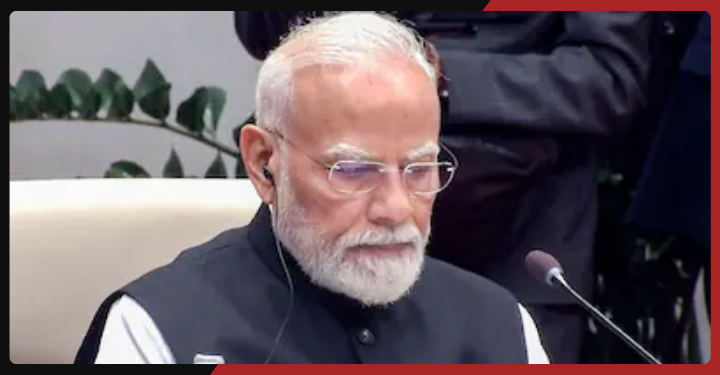
Prime Minister Narendra Modi used the Shanghai Cooperation Organisation Summit to deliver a strong and clear message on terrorism, stressing that the international community cannot afford double standards in dealing with extremist violence.
The remarks attracted widespread attention because Pakistan Prime Minister Shehbaz Sharif was present during the summit.
PM Modi called terrorism a major challenge to humanity and urged SCO member countries to take united action against the entire infrastructure supporting terrorist organisations.
India’s message focused not only on terrorists who carry out attacks but also on the networks that make such activities possible.
These networks can include sources of funding, recruitment channels, radicalisation campaigns and safe havens.
According to reports from the summit, PM Modi called for decisive action against this complete ecosystem.
The Prime Minister’s emphasis on “no double standards” reflected a position India has maintained for years.
New Delhi has consistently argued that terrorism cannot be classified differently based on political interests.
A group involved in violence against civilians cannot become acceptable simply because it serves someone’s strategic interests.
PM Modi’s remarks therefore carried a broader diplomatic message.
The fight against terrorism must be based on common principles rather than political convenience.
The presence of Shehbaz Sharif made the speech especially significant in the context of India-Pakistan relations.
The two countries have long experienced tensions over security and terrorism-related issues.
While PM Modi addressed the wider SCO gathering, his strong position ensured that India’s concerns were clearly communicated before regional and international leaders.
The Prime Minister also stressed the importance of international cooperation.
Modern terrorism has changed significantly over the years.
Extremist groups can now use encrypted communication, online platforms and international financial systems.
This means that no single country can completely address the challenge alone.
Governments need to share intelligence, monitor suspicious financial activity and cooperate in preventing extremist recruitment.
The SCO provides an important forum for strengthening such cooperation.
Its member countries represent a large geographical region with diverse political and security challenges.
PM Modi’s speech suggested that regional peace cannot be achieved without a serious and coordinated response to terrorism.
India’s approach also connects security with development.
Terrorism creates instability that can affect trade, investment and infrastructure projects.
Countries seeking stronger economic growth need an environment of peace and security.
This is why the fight against terrorism has become closely connected with India’s larger vision for regional cooperation.
PM Modi’s message was not limited to condemnation.
He called for practical action against the structures that allow terrorist organisations to survive.
Stopping funding can reduce operational capabilities.
Preventing recruitment can stop extremist groups from expanding.
Countering radicalisation can reduce the influence of violent ideologies.
Eliminating safe havens can make it harder for terror networks to organise attacks.
Together, these measures form a comprehensive strategy.
The Prime Minister’s SCO address showed that India intends to continue taking a firm position on terrorism at international platforms.
With Pakistan’s Prime Minister present, the remarks became one of the most closely watched moments of the summit.
PM Modi’s central argument remained clear: the world must stand together against terrorism.
There can be no selective approach, no political excuses and no double standards.
Only a united international response can successfully confront a threat that continues to cross borders and challenge global peace and security.
