

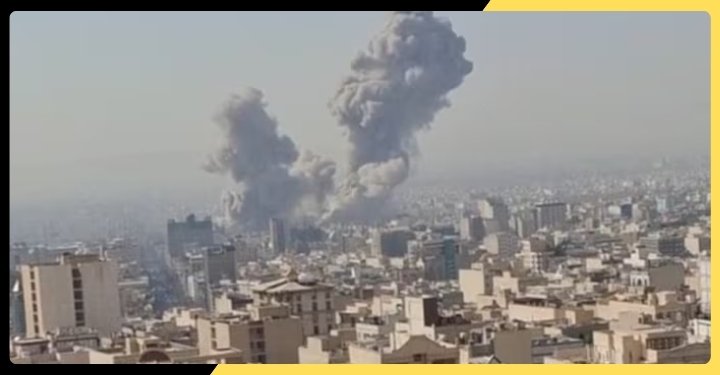
Explosions were reported across Tehran early Saturday after Israel announced it had carried out what it described as a “preventive strike” targeting Iranian assets, marking one of the most serious escalations between the two longtime adversaries in recent years.
Israeli officials said the operation was launched based on intelligence assessments indicating imminent threats to national security. In a televised statement, defense authorities characterized the action as defensive in nature, aimed at neutralizing specific military capabilities before they could be deployed against Israeli territory or interests.
Within hours of the announcement, residents in Tehran reported hearing multiple loud blasts in different parts of the capital. Videos circulating on local media showed smoke rising over sections of the city skyline, though Iranian authorities initially provided limited detail about the locations struck or the extent of the damage.
Iranian state media acknowledged the explosions and confirmed that emergency services had been dispatched. Officials condemned the strike as an act of aggression and warned that Tehran reserves the right to respond. While no comprehensive casualty figures were immediately available, security forces were seen increasing their presence in key districts of the capital.
Inside Israel, air raid sirens sounded in several cities as a precaution against possible retaliation. Civil defense authorities urged residents to remain near protected areas and to follow official instructions. Schools in some areas suspended activities, and public events were placed under review as the country shifted to heightened alert status.
The latest confrontation underscores years of deep-rooted hostility between the two nations. Israel has long viewed Iran’s missile development programs and regional military alliances as strategic threats. Iran, in turn, accuses Israel of undermining regional stability and interfering in its internal and external affairs.
Military analysts say the term “preventive strike” suggests Israel believed delaying action would increase future risks. Such operations are designed to disrupt or degrade an adversary’s capabilities before they are fully operational. However, they also carry the danger of triggering swift countermeasures.
Global leaders reacted with concern, calling for immediate restraint. Diplomatic channels were reportedly activated in several capitals as governments sought to assess the situation and encourage de-escalation. Energy markets showed signs of volatility amid fears that further hostilities could disrupt key supply routes in the region.
Security experts note that the coming days will be pivotal. Iran could respond through direct missile strikes, cyber operations, or actions carried out by allied groups across the Middle East. Any of these scenarios could widen the conflict beyond a bilateral exchange.
For now, uncertainty prevails. With both sides signaling readiness and warning of consequences, the region stands at a tense crossroads, awaiting the next move in a rapidly unfolding crisis.

Leave a Reply